Littlemill 1977 40 Year Old Cadenhead’s
70cl / 41.2%
£1399 Last one

| Country | scotland |
| Region | Lowland |
| Established | 1772 |
| Owner | Loch Lomond Group (owns remaining stock and brand rights) |
| Type | Single malt Scotch whisky distillery (closed) |
| Number of stills | |
| Visitor center | No |
| Status | Closed |
| Phone | n/a |
Littlemill Distillery is a Scotch whisky distillery that stood near Bowling, on the north bank of the River Clyde in West Dunbartonshire, Scottish Lowlands. It was founded in 1772, making it one of Scotland's oldest licensed distilleries, and was closed for good in 1994 before being demolished. Littlemill is remembered for its unusual triple-distillation history and for the rare, highly collectible bottlings that survive from its long and often troubled existence.
Littlemill's roots trace back to a brewery on the Auchentorlie Estate bought by Archibald Buchanan around 1750, with the distillery itself dated to 1772 by a carved stone on a warehouse gable. Robert Muir was granted one of the earliest excise licences for the site in 1773. Ownership changed hands repeatedly over the following two centuries: Matthew Clark & Co bought the distillery in 1817, and by 1823 Jane MacGregor was running it as licensee, making her one of the first known female distillery operators in Scotland. Hector Henderson took over in 1840 before going on to found Caol Ila, and the distillery was rebuilt and expanded in 1875 under an owner named Hay.
Littlemill closed briefly from 1929 to 1931, reopening under Duncan Thomas, who fitted rectifying columns in place of traditional swan necks and used them to produce three distinct styles of whisky from the same site — the heavily peated Dumbuck, the full-bodied Dunglass, and the lighter, traditional Littlemill malt. Barton Distilling took a shareholding from 1959 and full ownership by 1971, before Amalgamated Distilled Products acquired Barton in 1982. The Argyll Group's takeover in 1984 led to another closure, and the distillery lay silent until Gibson International reopened it in 1989.
Gibson International's bankruptcy forced Littlemill to close permanently in 1994. The Loch Lomond Distillery company acquired the site and its remaining maturing stock, dismantling the distillery buildings in 1997; a fire further destroyed what remained in 2004, and the site was later redeveloped for housing. No trace of the working distillery survives today. Because production ended so long ago and the surviving casks are finite, original Littlemill bottlings — including releases distilled under Duncan Thomas's Dumbuck and Dunglass experiments — are prized by collectors and independent bottlers, and command premium prices as one of the last tangible links to a distinctive strand of old-style Lowland whisky-making.
Littlemill distillery is located at Bowling, near Dumbarton, West Dunbartonshire, Scotland.
Littlemill distillery was founded in 1772.
Littlemill distillery is owned by Loch Lomond Group (owns remaining stock and brand rights).
Littlemill distillery is from Lowland, scotland.
You can buy Littlemill whisky at Glenbotal.co.uk. We currently stock 3 bottles with free UK delivery on orders over £99.
Last reviewed:
70cl / 41.2%
£1399 Last one
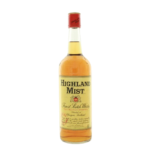
75cl / 35%
£79 Last one
5cl / 40%
£9 Out of stock
About Glenbotal
The idea of Glenbotal came to us naturaly: as whisky lovers, we were always on the lookout for new experiences in the whisky world. That’s why we created Glenbotal and became our very own first customers. We buy unique and hard to find spirits from auctions, ballots, and private collections. Then, we share them with a small circle of friends and people who can appreciate a good dram.